Marketing for Indian manufacturers, judged by the orders it wins.
Posters, expo booths and directory listings rarely win big orders. We run marketing as a profit centre: reaching the whole buying committee, closing the gap with sales and moving stalled quotations.
We also help overseas manufacturers grow with the same focus on quality, at Indian rates.
A senior b2b.prinkit.in consultant runs every 45-minute diagnostic and writes your report.
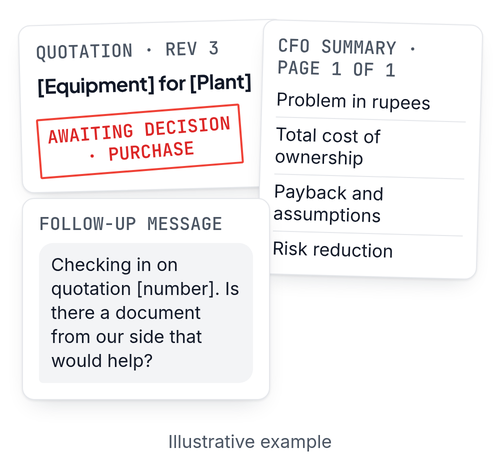
Marketing that stops at the enquiry can’t win the order.
Big orders for capital equipment are decided over months, by several people, after the enquiry has arrived. Much of the marketing manufacturers pay for stops long before that point.
Posters, booths and directories bring price-shoppers
Directory listings and expo footfall bring traders, brokers and students as often as buyers. Few of them will ever put you on a shortlist.
One contact, but many people decide
The plant head, purchase, engineering, finance and often the MD all sign off a big order. Your sales team usually knows one of them.
Quotations sit “under review” for months
Many quotations aren’t lost to a competitor. They stall because someone on the buyer’s side can’t justify the spend.
Sales and marketing work from different scorecards
Marketing reports clicks and impressions. Sales is judged on orders. Nobody owns the gap between the two.
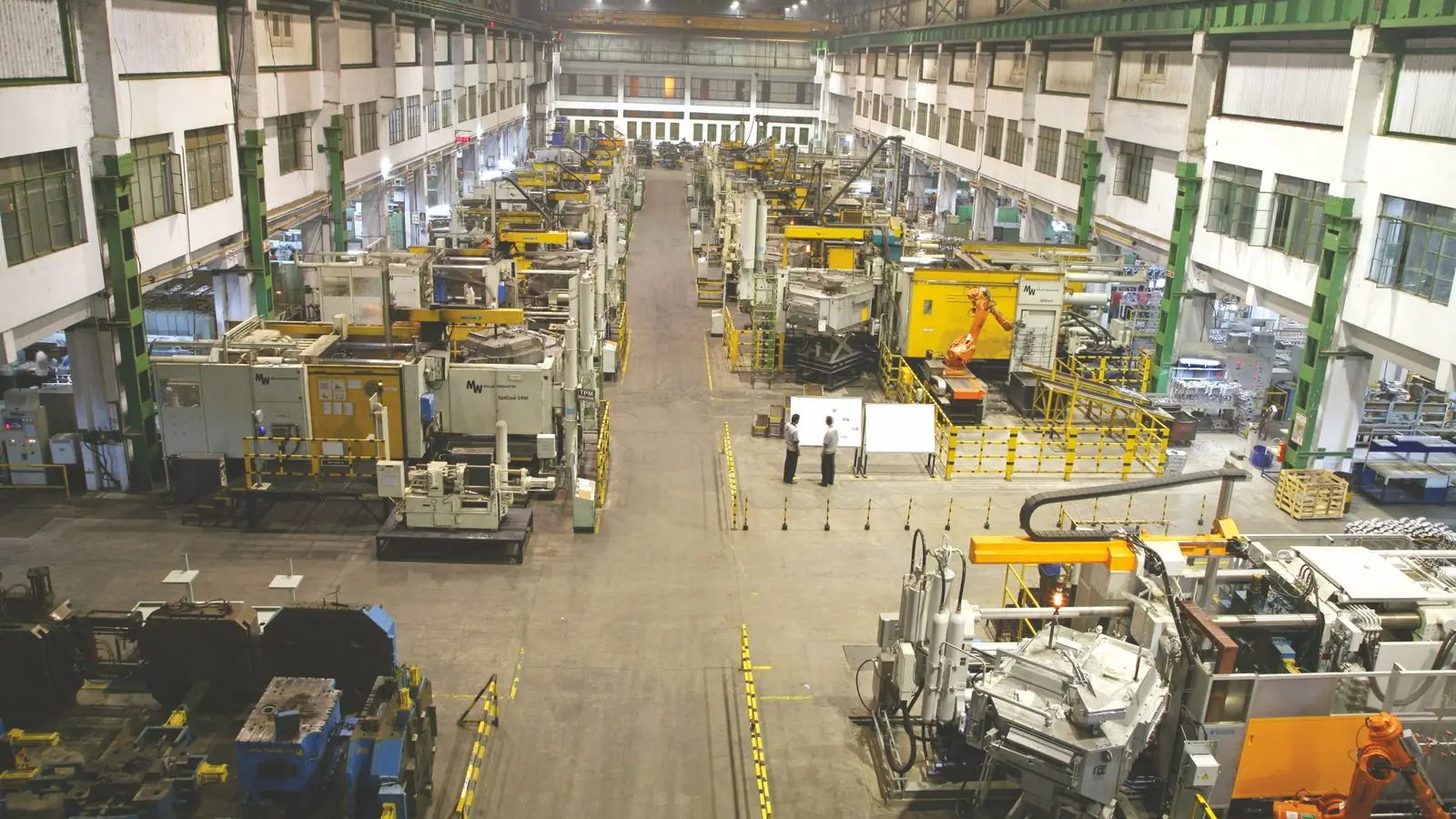

Owners, MDs and sales or marketing heads at Indian industrial and engineered-to-order manufacturers, with typical orders of ₹50L to ₹10Cr+, long sales cycles and several people in each buying decision.
See Where Your Quotations StallWork we've made for manufacturers





Four commercial phases. Two foundations underneath.
Every engagement runs on the 4+2 Growth Matrix, and so does every diagnostic. Four phases of how a manufacturer wins and grows accounts, and two foundations.

Demand Generation
Do plant heads, EPC consultants and specifiers know you before the RFQ is written?
Demand Capture
When a buyer is ready, can they find you, trust you and send an enquiry easily?
Pipeline Acceleration
Once a quotation is out, what moves it forward, what makes it stall, and are you reaching the whole buying committee?
Retention & Expansion
Are you growing spares, AMCs, upgrades, retrofits and repeat orders from equipment already in the field?
From one 45-minute call to orders you can trace
Every engagement starts with the free diagnostic. If you then want us to run the plan, the work follows four steps, and each one is judged by what it does to orders.
Choose the plants and projects worth winning
Reach every decision-maker on the committee
Get stalled quotations moving again
Measure marketing by orders won
Choose the plants and projects worth winning
Reach every decision-maker on the committee
Get stalled quotations moving again
Measure marketing by orders won
- Step 1
Choose the plants and projects worth winning
Instead of waiting for enquiries, you get a focused list of target accounts. We research their plants, projects and expansion plans, and who sits on each buying committee, so your sales team spends its time where orders are likely.
- Step 2
Reach every decision-maker on the committee
The plant head cares about uptime, purchase about risk and total cost, engineering about specs, and the CFO about payback. We plan content, LinkedIn and search campaigns for each role, so the whole committee is comfortable choosing you.
- Step 3
Get stalled quotations moving again
How many quotations are sitting “under review” right now? We help your sales team find out who is holding each one, and give your champion the payback case, comparisons and proof they need to get it approved internally.
- Step 4
Measure marketing by orders won
No more reports full of clicks and impressions. We connect your campaigns to your CRM and sales records, so you can judge marketing the way you judge a new machine: by what it returns.
Find a useful starting point for your growth conversation
We start with what you want to sell and who you want to reach.
These questions suggest a direction to discuss; they do not establish suitability or replace a conversation.
Choose the business priority you want us to examine first.
“Not sure” is a useful answer.
Discuss a consulting requirement
We can start that conversation directly; completing this preview or downloading a resource is not a prerequisite.
Preview your diagnostic
1. What would you like more buyers to buy?
2. Who would you like to buy it?
A new customer is not necessarily a new market.
Another plant of a familiar buyer type can still belong to the market you already serve.
If “new” and “current” both apply, choose one priority or leave the direction open for discussion.
3. Which opportunity is closest to that priority?
These are alternative opportunities, not a checklist of services.
Current offer / current market
Current offer / new market
New offer / current market
New offer / new market
“Another opportunity” and “Not sure yet”. Neither assigns a route. If an option does not match the earlier answers, we clarify the offer and buyer group rather than forcing a match.
4. What needs attention in that opportunity?
We use this answer to focus the discussion, not to change the growth direction or infer the cause of a problem.
5. What could we review together?
Choose all that apply, or choose “Not ready” or “Not sure” on its own.
We use the available evidence to identify what needs checking. Missing material is a discussion point, not a score or an automatic rejection.
Direction previews
Win More in Your Current Market
Why it may fit: Your priority is an offer you already supply, for a buyer group you understand. The question is how we approach additional customers or develop existing supply relationships.
What we would examine first: A recent enquiry-to-order example, the accounts you want to reach and the evidence those buyers need. For installed-base work, we would also look at the customer and equipment records you can share.
Enter New Markets and Buyer Tiers
Why it may fit: The offer is established, but the proposed buyers are different. We need to separate a new geography, a new industry and a higher buyer tier because their information needs differ.
What we would examine first: Which application evidence transfers, what the new buyers ask for and where your current materials leave unanswered questions. For vendor consideration, we look at positioning and supporting proposals; we do not obtain vendor registration.
Launch New Capabilities to Existing Clients
Why it may fit: You know the buyer group, but the offer changes. We need to make the new capability understandable without assuming an existing relationship is enough for a buying decision.
What we would examine first: The capability your engineering or service team can substantiate, the application it supports and how buyers would specify or evaluate it. Your engineering team retains responsibility for design and delivery.
- Introduce a higher-specification or import-substitute range to buyers we already serve.
- Add neighbouring equipment, modular products or related components for our familiar buyers.
- Present an integrated skid or complete-line capability to the customers we already serve.
- Introduce packaged maintenance contracts or retrofit offers for our installed equipment.
Build a New Business Frontier
Why it may fit: Both the offer and the intended buyer market change. We need to examine that combination before proposing work, rather than apply a standard programme.
What we would examine first: The proposed offer, available evidence, buyer access and the people responsible for delivery. We consider this direction case by case; the preview is not a commitment to take it on.
We have not selected a direction from these answers. We can discuss the offer and buyer group with you.
What the diagnostic covers
A 45-minute call with a senior b2b.prinkit.in consultant, then a written report within 3 business days of the call. It’s free, there’s no obligation, and the report is yours to use whether or not you work with us.
What you get
- A 45-minute call with our consultant, working through the six areas of the 4+2 Growth Matrix using your real situation.
- A written report within 3 business days of the call, with:a 4+2 Growth Matrix scorecard: each area rated, with the reason behind each rating;3 recommendations, in priority order, with the first step for each;a 90-day outline of what to do, month by month.
How the diagnostic runs
- 1
You fill in the short form.
- 2
We read it and reply within 1 business day to confirm details and offer call times.
- 3
The 45-minute call.
- 4
Your written report, within 3 business days of the call.
- 5
You decide what happens next. If you’d like our help putting the plan into action, we can talk about it. If not, the report is yours.
To prepare (rough numbers are fine): how many quotations you send in a typical month and roughly what share become orders, where deals usually stall, and the two or three accounts you’d most like to win.
Growth marketing we plan and run for Indian manufacturers
We plan and run the work, and judge it on the numbers an MD cares about: qualified opportunities, win rate, sales-cycle length and order value.
Reach the Buying Committee
Big orders are decided by a committee. We help you pick the accounts worth pursuing, map who sits on each committee and reach each person, so your name is known before the enquiry goes out.
- Choose and rank target accounts that fit your plant and order size
- Reach the whole committee: MD, plant head, purchase, engineering, CFO
- Build the case on value and lifecycle cost, so you aren’t dragged into L1 pricing
Turn Searches Into Real Enquiries
We set up search, LinkedIn and website funnels that reach engineers and buyers while they are looking for what you make, and ask for the details your sales team needs before anyone quotes.
- Show up on the searches engineers use when comparing suppliers
- Ask for specs, quantities and timelines before a quote is prepared
- Route every serious enquiry straight to the right person in sales
Move Stalled Quotations Forward
We help your sales team give each person on the buyer’s side what they need: a payback note for the CFO, a risk and TCO comparison for purchase, and proof for engineering, so the decision moves.
- Give finance a clear payback and lifecycle-cost case to take to the MD
- Give engineering the test data and spec sheets they need to sign off
- Plan follow-ups for each committee member
Build a Website That Brings RFQs
Many manufacturer websites talk about “quality” and “excellence” without telling an engineer what you make, to what spec, for which applications. We rebuild the key pages around products, specs and applications, so a visiting engineer can shortlist you and send an RFQ.
- Fast-loading pages that work on a phone at the plant
- Sizing, payback and lifecycle-cost calculators for your products
- Plain-English copy that explains what you make and why it’s worth more
Put Sales and Marketing on One Plan
We connect your website, CRM and campaigns so each enquiry is tracked to the purchase order, and give your sales engineers the decks, answers and playbooks that match what the committee has already seen.
- Track each enquiry from first contact to signed purchase order
- A simple monthly pipeline report the MD and sales head can read fast
- Agree with sales what counts as a good lead, and which enquiries deserve a quote
Discuss Your Accounts With Us
Book Free Diagnostic A senior b2b.prinkit.in consultant runs every 45-minute diagnostic and writes your report.Why big orders are decided in the boardroom
Only a small share of buyers are in the market at any time
Research from the LinkedIn B2B Institute and the Ehrenberg-Bass Institute (the "95:5 rule") suggests only about 5% of B2B buyers are in the market at any given time. Many campaigns spend almost everything on that 5%. We also build your name with the rest, through technical content, LinkedIn and expos, so you're on the shortlist when their buying window opens.
Each person on the committee needs different proof
- CFOa payback and lifecycle-cost case they can take to the board.
- Engineeringtest data, spec sheets and references to applications like theirs.
- Purchasea clear risk and TCO comparison, so the decision isn’t made on L1 price alone.
- Plant headconfidence about uptime, installation and service.
- MDone page on why this order is worth it.
Want to know which of these applies to your pipeline? Start with the free diagnostic.
Get the Boardroom View of Your PipelineHow manufacturing orders are won
Is the diagnostic really free?
Yes. There’s no fee and no obligation to work with us afterwards. The report is yours either way.
Who runs the call?
A senior b2b.prinkit.in consultant. They run the 45-minute call, do the analysis and write your report.
What’s in the written report?
A 4+2 Growth Matrix scorecard, 3 recommendations in priority order and a 90-day outline. It arrives within 3 business days of the call.
Is this a sales pitch?
No. The 45 minutes are about your business. If a follow-up conversation makes sense after the report, we’ll suggest it once and you decide.
Do we need to share financials?
No. Ranges and rough numbers are enough.
Can colleagues join the call?
Yes. Bring whoever knows the pipeline best, such as your head of sales, business development or marketing.
Who is the diagnostic for?
Owners, MDs and sales or marketing heads at Indian industrial and engineered-to-order manufacturers, with typical orders of ₹50L to ₹10Cr+. We work with manufacturers across India. It isn’t for traders or resellers, or for anyone looking for a quick quote on a website or ads.